NetWalking: Why Walking Side by Side Creates a Collaborative Advantage – Netwalking for Staffs Chamber of Commerce

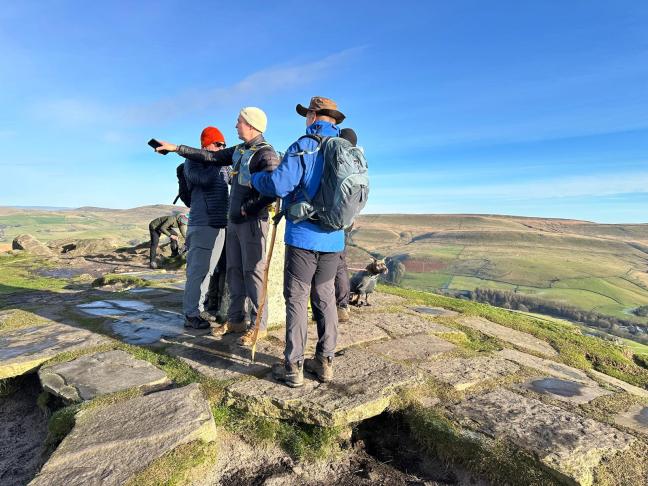
We Evolved to Think While Moving For almost all of human history, important conversations happened while walking. Our ancestors solved problems, planned journeys, built alliances and shared stories as they travelled through landscapes together. Movement wasn't separate from thinkingβ€”it was part of thinking. Modern neuroscience increasingly supports this ancient practice. Walking increases cerebral blood flow, … Continue reading NetWalking: Why Walking Side by Side Creates a Collaborative Advantage – Netwalking for Staffs Chamber of Commerce

The Future Doesn’t Belong to Ladder Climbers. It Belongs to Pilgrims.

For generations, success followed a familiar script: work hard, get promoted, climb higher. It was a world of certainty, predictable career paths and clear milestones. That world is disappearing. Artificial intelligence, automation, economic uncertainty and changing industries mean that the old career ladder has become increasingly fragile. Many people are discovering that climbing faster doesn't … Continue reading The Future Doesn’t Belong to Ladder Climbers. It Belongs to Pilgrims.

The Stoic Pilgrim Field Skills Day – Register Your Interest

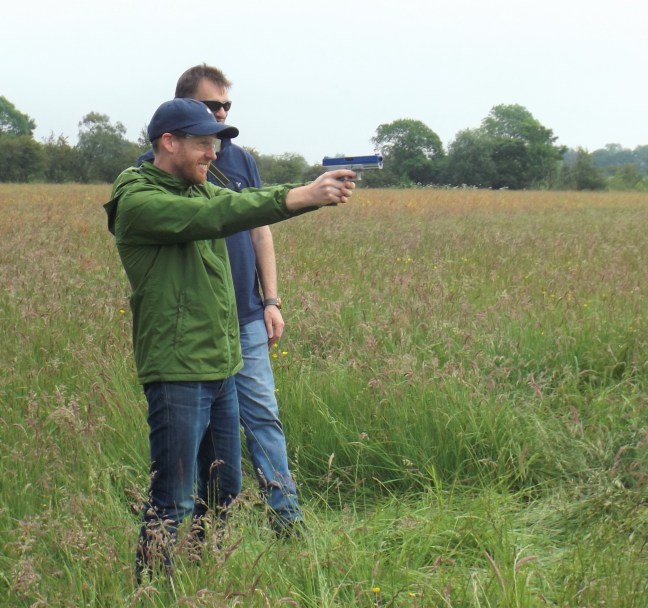
What if you could spend a day learning practical skills that build confidence, capability and calm under pressure? This isn't about becoming a martial arts expert, survivalist or action hero. It's about understanding yourself. We'll explore how fear works, where courage comes from, and why simple skills, sound judgement and good strategy often outperform complexity … Continue reading The Stoic Pilgrim Field Skills Day – Register Your Interest

D3R explores a different path.

Most people still believe that if something catastrophic happens to their community, someone will come. Governments. Aid agencies. Corporations. Systems. But modern societies are sleepwalking into major shocks while depending almost entirely on fragile, centralised systems that are increasingly stretched, extractive, and unsustainable. Energy, food, medicine, communications, finance, logistics, even human connection itself β€” outsourced … Continue reading D3R explores a different path.

πŸš€ Dynamic Teaming for an AI World πŸ§‘β€πŸ€β€πŸ§‘πŸ§‘β€πŸ€β€πŸ§‘

AI is changing work rapidly. The organisations that thrive won’t necessarily be the biggest β€” they’ll be the most adaptive. Small, high-trust teams now have access to tools and capabilities once reserved for entire departments. But technology alone is not enough. Teams still need clarity, communication, ownership, and the ability to make good decisions under … Continue reading πŸš€ Dynamic Teaming for an AI World πŸ§‘β€πŸ€β€πŸ§‘πŸ§‘β€πŸ€β€πŸ§‘

840,000 people die each year from health conditions linked to psychosocial risks at work

A new report from the International Labour Organization highlights a stark reality: over 840,000 people die each year from health conditions linked to psychosocial risks at workβ€”things like long hours, job insecurity, and harassment. These pressures, often tied to cardiovascular disease and mental health struggles, also cost the global economy around 1.37% of GDP annually. … Continue reading 840,000 people die each year from health conditions linked to psychosocial risks at work

Why Toxic Personalities Rise in Rigid Systems

Put people inside a rigid hierarchy with poor accountability…and don’t be surprised who climbs fastest. Not the most capable.Not the most grounded. The most adapted to the game. Psychology names part of this the Dark Tetrad: Manipulators who play the long game Attention-seekers who dominate the room Cold competitors who intimidate Those who quietly (or … Continue reading Why Toxic Personalities Rise in Rigid Systems

Why We Need More Elders

For around 300,000 years, humans lived in small, interdependent groups. Not rigid hierarchies.Not corporate ladders.But adaptive, self-organising communities. Anthropologist Richard B. Lee described many of these societies as fiercely egalitarian. Each person embodied a role: Shaman β€” wisdom, pattern recognition, decision integrity Hunter β€” decisive action, focus, courage under pressure Scout β€” curiosity, exploration, new … Continue reading Why We Need More Elders

🌳 From Resilient to Robust: What the Oak Tree Teaches Teams πŸŒ³

There are four levels of resilience. Understanding them changes how we develop people, teams, and organisations. 1. Regression When pressure hits, people fall back. Energy drops. Capability narrows. Support is needed just to stabilise. 2. Resistance The instinct to push back against change. Avoidance. Delay. Quiet denial. This is visible across society right nowβ€”in how … Continue reading 🌳 From Resilient to Robust: What the Oak Tree Teaches Teams πŸŒ³

Redesigning Human Systems to Be Egalitarian

It seems over our history, that we have shifted from hierarchy to egalitarianism over the years, even over a year depending on fishing and hunting seasons. My own research led me to a system in the brain called the 'Dominance Behaviour System (DBS). When you give someone power, they tend to make different decisions, ones … Continue reading Redesigning Human Systems to Be Egalitarian